- ISO 9001:2015 Certified
- ASPA Member
- SEDEX Certified
- 4 Manufacturing Units
Home > Our Product > Ribbons, TTO & Coding Foils
Cloudswood is one of the top leading companies for converting barcode ribbons, with multiple grades suitable for every industry — plus TTO ribbons for high- speed variable printing and batch coding foils.
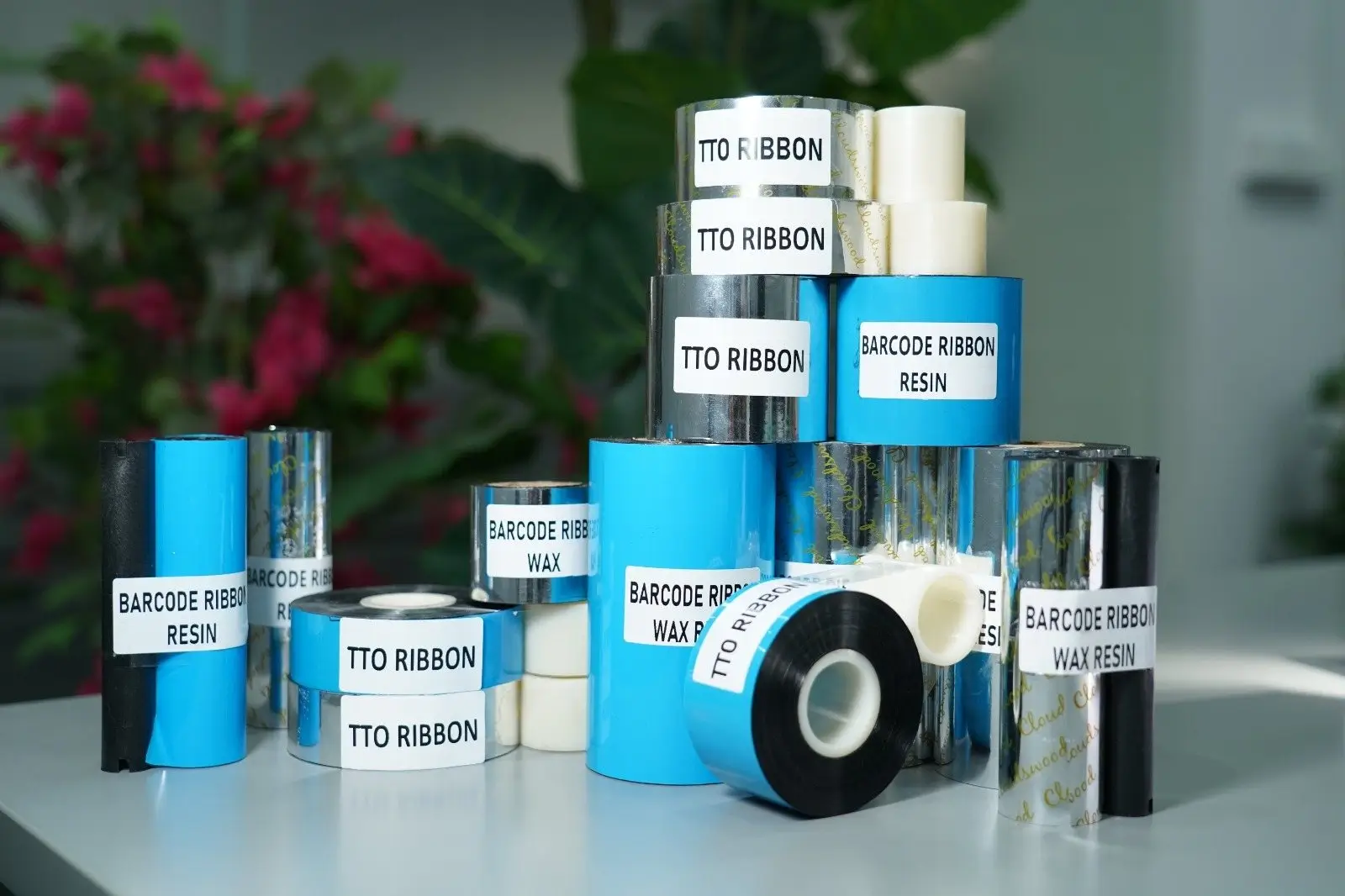
There are three types of thermal transfer ribbon — wax, wax/resin and resin. Each type has a range of subtypes such as economy and premium grades.
Thermal transfer printing is done with two types of print head: flat-type print heads and near-edge print heads (also called true edge or corner edge). The ribbons used for these two technologies are
different, even though the chemistry type may be the same.
Specifying the wrong combination is the single most common cause of poor print quality, head wear and label failure in the field.
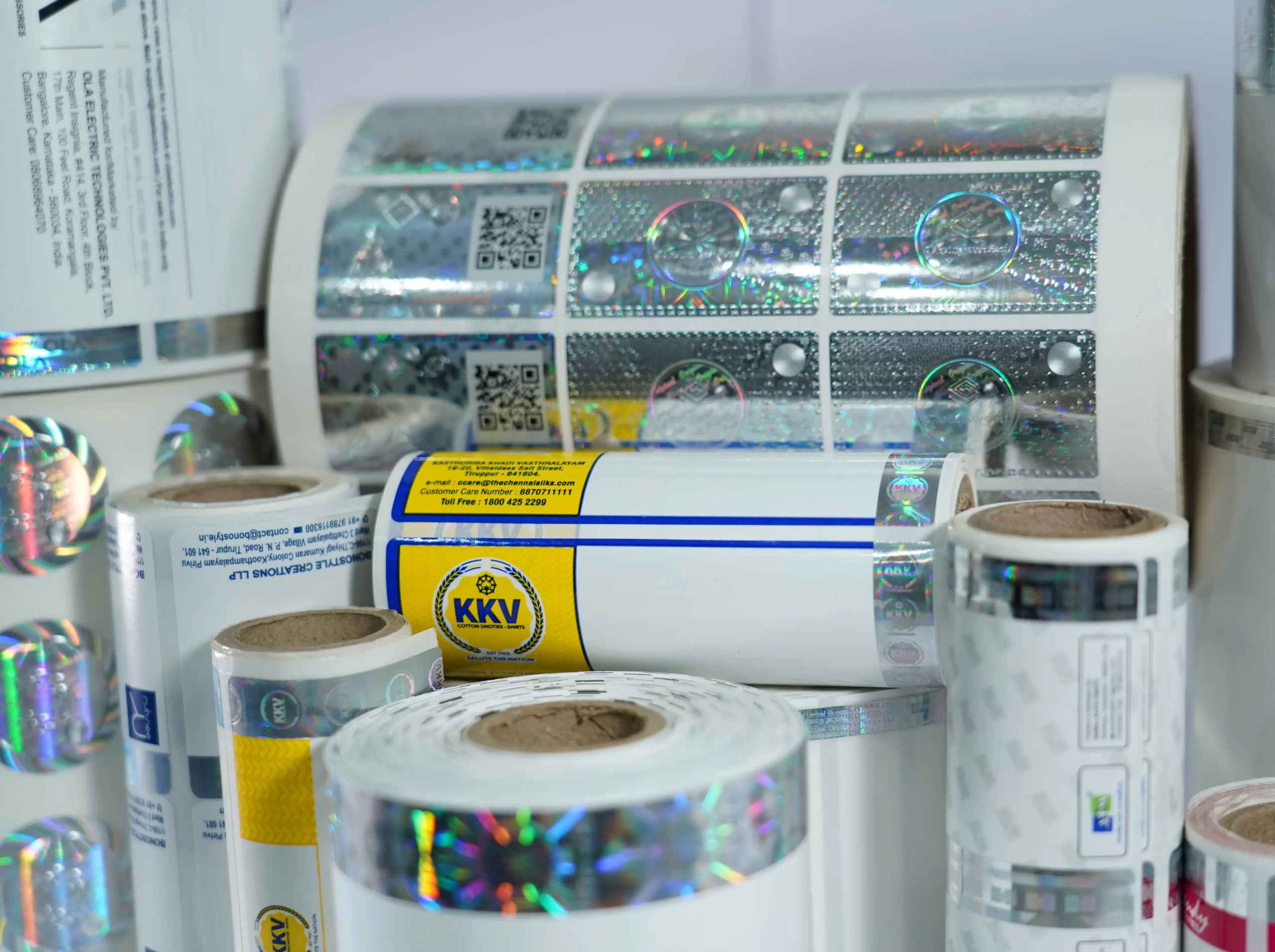
These features are highly advanced and effectively impossible to copy with conventional print or scanning technology.

Mostly used for indoor applications. The least expensive of all thermal transfer ribbons.

Long life and good resistance. Widely used in automotive, pharmaceutical, e-commerce and garment industries.

For harsh environments, extreme conditions and long life. The most expensive of the three.
Wax
The least expensive of all thermal
transfer ribbons. Wax ribbons have a high percentage of wax-based substance in the colorant, and most are made with a single colorant layer.
Because waxes have lower melting points than resins, printing can be done at lower heat settings and energy levels. As waxes are softer, image durability against smudge, scratch, chemical and environmental exposure is lower — so wax ribbons suit uncoated or matte coated surfaces where there is little abrasion or physical contact.
Typical use: general purpose labelling, shipping labels, address labels, garment tags, price tickets, warehouse applications, compliance labels, shelf and bin labels, retail tags.
Wax / Resin
Among the most complicated designs, making attempted forgery very challenging. The typical resolution of 10 micrometres per holographic optical element (HOE) makes this a very expensive design to reproduce. The images usually feature computer-generated radiation patterns.
As resins are harder than waxes, image durability, chemical resistance and abrasion, smudge and scratch
resistance are all higher. They also give excellent edge definition and can be used with glossy or smooth surfaces and synthetic materials. Print speeds of up to 16 inches per second are achievable.
Typical use: everywhere wax is used but where abrasion or contact is likely — automotive, pharmaceutical, e-commerce and garment industries.
Resin
Resin ribbons contain the highest
percentage of resin materials and are made up of two or more layers. Printing is done at high energy levels and heat settings because resins have a high melting point, which means lower print speeds.
The resulting image has very high
resistance to chemicals, heat, abrasion and other environmental conditions.
Typical use: textile, apparel and garment labels (taffeta, satin), high-gloss coated materials such as polyester and polyolefin, destructible vinyl, warranty void labels, chemical drum labels, medical and pharmaceutical labelling, industrial and automotive applications.
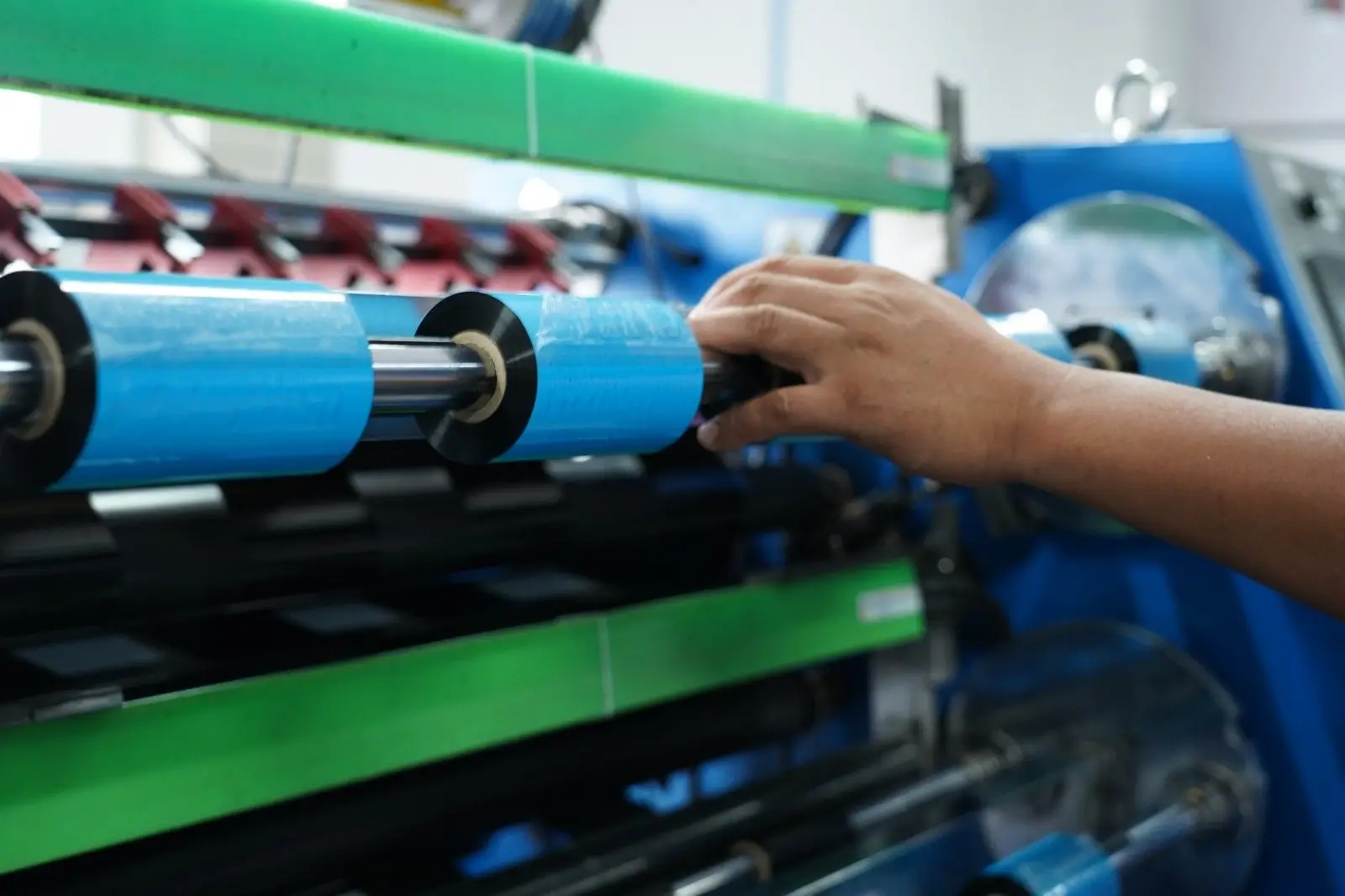
Coding foils are used for imprinting information — including variable data — on products and packaging during production or filling. They are typically used for manufacturing traceability data such as dates and batch numbers.
Compared with inkjet and other alternative marking systems, foil coding is a simpler and cleaner process. The result is highly resistant to rubbing, scuffing and chemical attack, which makes it well suited to regulatory and safety-critical marking.
The application of heat and pressure during imprinting, and the absence of any dot structure in the image, ensure that foil coding retains legibility even when small, fine type is used on uneven and difficult substrates.
Foil-based coding equipment is highly reliable, inexpensive to
maintain and straightforward to operate compared to alternative
electronic printing systems.
TTO ribbons are used for printing variable information on high-speed machines. They are used mostly on laminates, in FMCG and medical product applications.
TTO ribbons give high clarity and standard scratch resistance, making them the standard choice for date, batch and lot coding directly onto flexible packaging at line speed.
| Property | Wax | Wax / Resin | Resin |
|---|---|---|---|
| Colorant base | High wax content | Wax + resin, resin dominant | Highest resin content |
| Layers | Usually single colorant layer | Two or more | Two or more |
| Melting point | Lowest | Medium | Highest |
| Print energy | Low heat setting | Higher than wax | High energy |
| Print speed | High | Up to 16 ips | Lower |
| Smudge & scratch | Lower resistance | Good resistance | Very high resistance |
| Chemical resistance | Limited | Good | Very high |
| Edge definition | Standard | Excellent | Excellent |
| Suitable surfaces | Uncoated / matte coated paper | Glossy, smooth, synthetic | Polyester, polyolefin, destructible vinyl, textiles |
| Relative cost | Lowest | Medium | Highest |
| Environment | Indoor, short life | Long life, good resistance | Harsh, extreme, long life |
| Ribbon types | Wax, wax/resin, resin — each in economy and premium subtypes |
|---|---|
| Print head types | Flat-type and near-edge (true edge / corner edge) — ribbons differ by head type |
| TTO ribbons | High-speed variable data printing, mostly on laminates |
| Coding foils | Batch, date and traceability coding; full range of shades and grades |
| Foil substrates | Paper, film, hard plastics, acrylics, acetates, nylon, polystyrene, PVC, lacquered surfaces, wood, metals, leather |
| Manufacturing standard | ISO 9001:2015 Certified — Certificate 09112090A |

Replies within one working day
Four fields. A sales engineer picks it up — not a call centre.
Or call +91 98452 42269 (India) · +971 56212 2551 (UAE)